In a previous blog post, we mentioned launching a TikTok account to further our zine’s reach. After trying this and trying that, we finally reaped the rewards: our first like! By a complete stranger! Who would have guessed that a pairing of Minecraft and Robert Louis Stevenson, sprinkled with some pirate-y goodness (backed by the unmistakable dada dum dum dada dum dum of The Pirates of the Caribbean theme) was just what TikTok wanted to see from us? Well, at least one person did.
We love Minecraft, and in light of the game’s heightened visibility due to the recent movie, we thought, ‘Why not? Lean into what is popular!’ But VerseVarmint is a literary zine, and we don’t want you to forget it! Because the game features so many elements of a good make-believe session, it took only a bit of brainstorming before we had an idea!
Our player character (already styled as an elf or fairy, of course) sets off into the gorgeous sunrise? Sunset? Indeterminate time of day and weather due to editing goofs? We are on a (kind of) dangerous journey in a wooden boat, armed with a wooden sword and a treasure map. After a (slightly) too-long, vigorous paddle across the vast but beautiful ocean, we uncover the best “x marks the spot” treasure of all: “Pirate Story,” a poem by Robert Louis Stevenson. Upon reflection, perhaps the book should have been the only item in the chest. Oh well…
For anyone unfamiliar with “Pirate Story” (or if you haven’t seen the video), here is the first stanza:
Three of us afloat in the meadow by the swing,
      Three of us aboard in the basket on the lea.
Winds are in the air, they are blowing in the spring,
      And waves are on the meadow like the waves there are at sea.1
While Stevenson was born 175 years ago, his words evoke a familiar, though perhaps forgotten, experience.
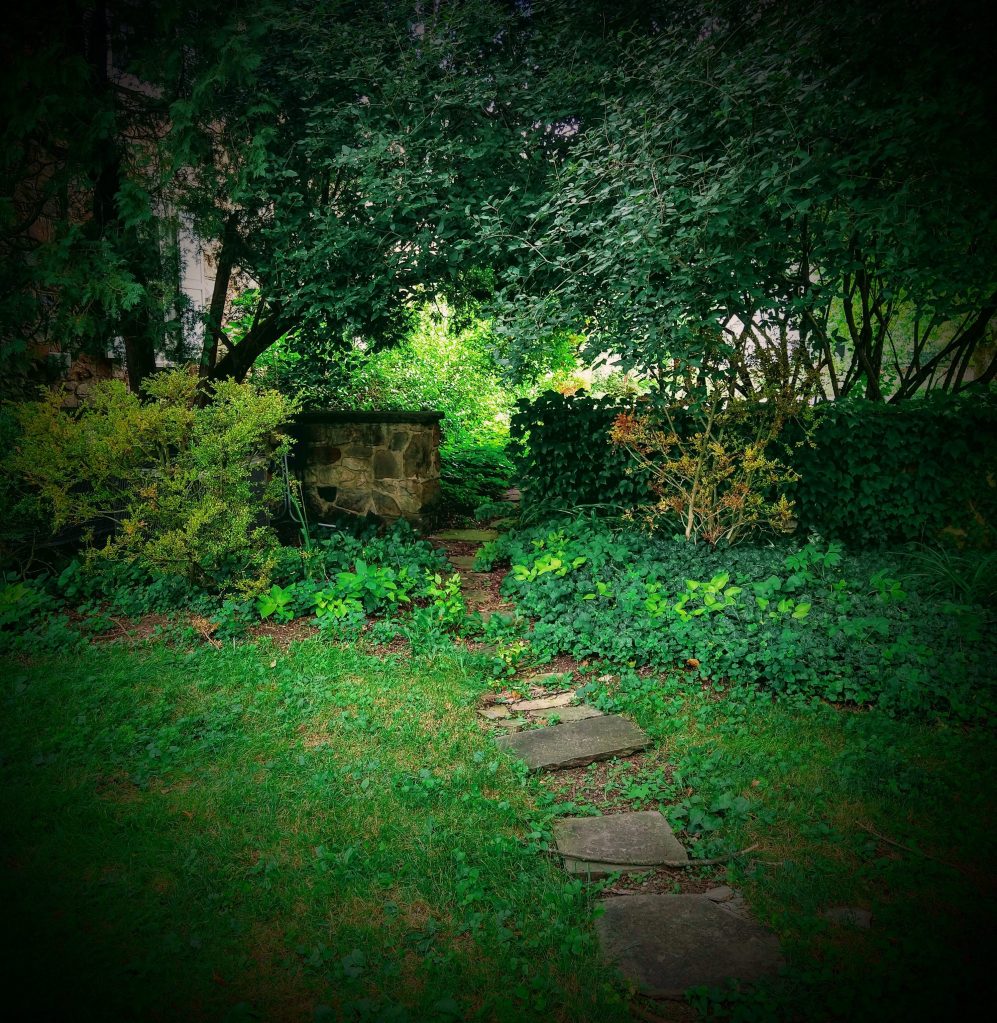
How many of us once pretended that an ordinary vegetable patch was a secret garden or that a gap in the hedges led to a fairy world? Or even that our toy cars were Grand Prix racers? “Pirate Story” links us, not only to children of the past but to our own childhood selves.
Working on this two-minute-and-some video left us wondering: what would our writing look like if we approached life more like the children of “Pirate Story”? Was it Pablo Picasso who said, “Every child is an artist. The problem is how to remain an artist once he grows up”? While maturity may enhance our technical skills as writers, we personally note the (downward) shift in imaginative chance-taking when comparing poems and stories from our youth to those of today.
Moving forward, we challenge you to experiment:
- Watch a favorite tv show or film from childhood
- Play a game just because you want to
- Draw or write with chalk
- Paint a picture (and hang it on the fridge)
- Swing on a swing or go down a slide (wait your turn, kids first)
- Treat your inner child by revisiting a childhood joy of your choosing
And then:
- Reframe the occasional “that would never work” thought as a “that could work” thought
- Think back to misperceptions or misconceptions you had growing up. Write them down; these might come in handy.
- Practice making descriptions the way a child might or in a way that differs from your usual approach
- Write or outline a story set somewhere absurd
- Create some characters that differ from your typical types
The experiments are endless.
We hope that you will also take some time to become more familiar with Robert Louis Stevenson’s work. He is, of course, famous for Treasure Island, but we especially love his poems for children. Visit your local library and ask about A Child’s Garden of Verses by Robert Louis Stevenson. We adore the version illustrated by Gyo Fujikawa. Flipping through, you will find “Pirate Story” among numerous other delightful poems.
- Stevenson, Robert Louis. 1893. Pirate Story. Academy of American Poets. Accessed July 2025. https://poets.org/poem/pirate-story. ↩︎
 VerseVarmint
Leave a comment